
Home / Sectors / Transport Hubs
Rail stations · terminals · left luggage
Screening For Transport Hubs
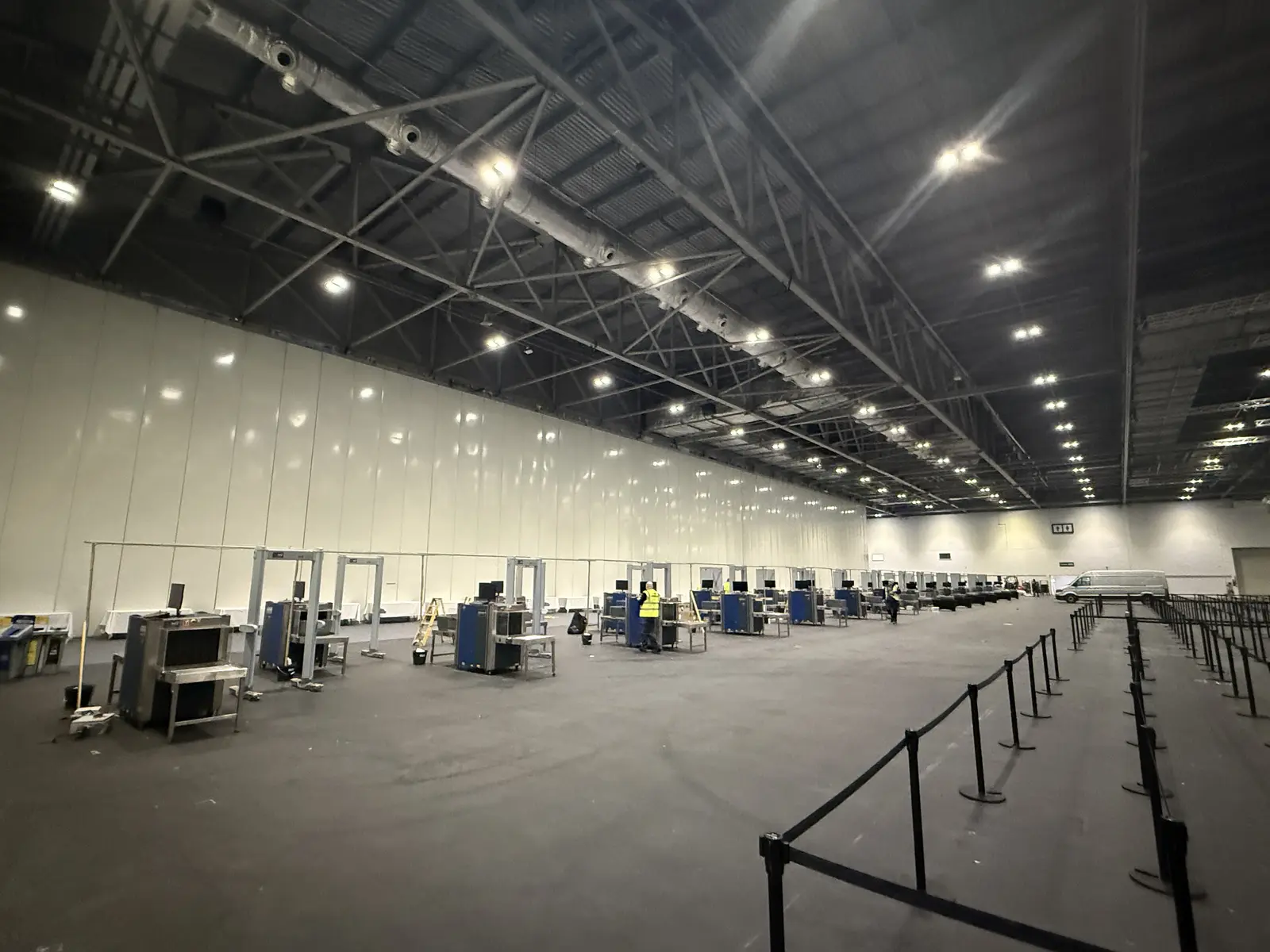
Transport screening never gets a quiet period. Passengers arrive continuously, they carry more than event visitors, and the checkpoint has to work at 06:00 and at 18:00 without a change of pace. We have built and maintained screening across UK rail, including all 11 security lines at St Pancras International.
Start here
What You're Actually Trying To Stop
The distinctive feature of transport screening is that it runs all day, so anything that degrades over a shift — operator attention, tray supply, hygiene, throughput — becomes the real problem.
- Weapons and devices — the regulated or risk-assessed threat, depending on whether your route is a designated one.
- Left luggage risk — items accepted for storage are items you have taken responsibility for, which changes the duty of care.
- Sustained throughput — a transport checkpoint that only works when it isn't busy doesn't work.
- Operator fatigue — eleven hours of image reading is where consistency quietly disappears, and where AI earns its place.
Our recommendation
What Suits A Transport Hub
Bigger tunnels than an office needs, and automation that holds the standard through a full operating day.
Garrett Paragon Archways
Networkable walk-through detection with zone indication and live checkpoint statistics, and Quick-Q so passengers keep phones and keys in their pockets — which is what actually holds a concourse queue up.
HS 6040 & HS 8065 X-ray
The 6040 EVO2 for standard travel bags, the 8065 EVO2 where suitcases, oversize items and hold baggage go through. Belt speed is adjustable, so the lane is tuned to your flow rather than the other way round.
AI On Every Lane
Automatic threat flagging holds the detection baseline at hour eleven exactly as at hour one, and lets one operator oversee multiple lanes. Outside aviation, where regimes are prescribed, we recommend AI on every X-ray we supply.
Just as important
What You Probably Don't Need
In practice
How It Runs Day To Day
Surveyed first
Concourse flow, power, access and lane geometry assessed before anything is specified — usually the difference between a good checkpoint and a permanent bottleneck.
Built and commissioned
Installed, image-verified and radiation-checked by our own engineers, with operator familiarisation for the people running it.
Kept running
Multi-brand maintenance, IRR17-compliant servicing and a hire fleet if a system has to come out of service.
We service transport screening equipment across brands, including legacy machines the original manufacturer no longer supports.
Proof
A World First, Built For Eurostar
When Eurostar needed a problem solved on all 11 security lines at St Pancras International, they came to us — and we engineered, built and installed a world first to do it. That is the kind of work transport screening occasionally demands, and the reason operators call us when the answer isn't in a catalogue.
Screening That Runs All Day
Tell us your concourse, your peak flow and what you're screening for. We'll design the lane around it.
Ask RedteQ Other sectors