
Home / Sectors / Offices & Receptions
Corporate HQ · receptions · lobbies
Screening For Offices And Receptions
A corporate lobby has to feel like a welcome and work like a checkpoint. The equipment has to fit through the door, look like it belongs, and screen a visitor without making them feel like a suspect.
Start here
What You're Actually Trying To Stop
Most offices are not screening for the same reason an airport is. The driver is usually a specific, identifiable concern — and naming it honestly is what stops you over-buying.
- Weapons brought into the building — the reason most corporate screening programmes start, often after an incident elsewhere in the sector.
- Items posted or delivered in — a mailroom problem more often than a lobby one, and worth separating from visitor screening.
- Recording devices in sensitive meetings — boardrooms, results announcements and negotiations, where the risk is information rather than harm.
- Reputational damage — a heavy-handed checkpoint in a client-facing lobby has its own cost, and it should be weighed.
Our recommendation
What Works In A Lobby
Compact, quiet and quick. Corporate screening lives or dies on whether reception can run it without a security background.
Compact X-ray
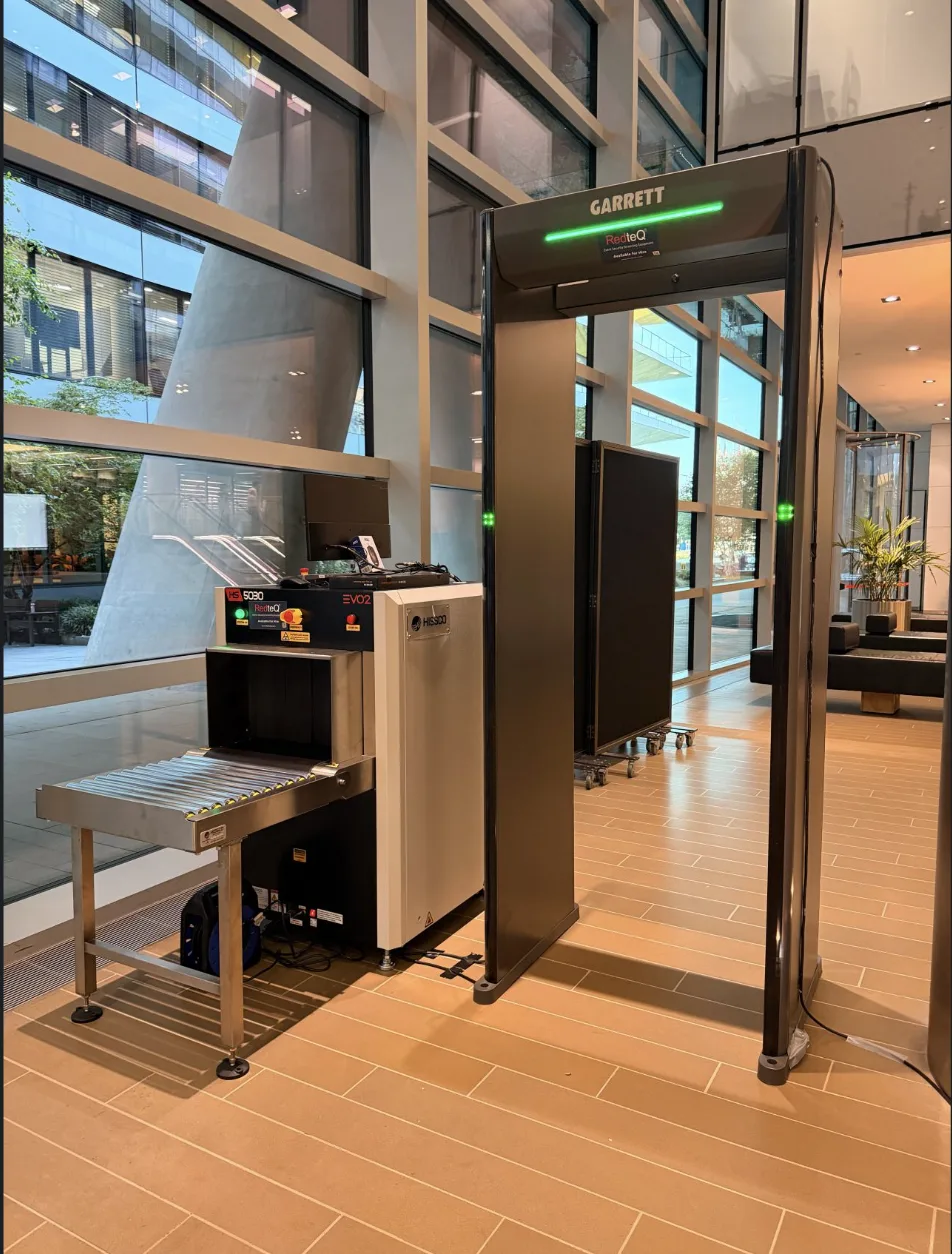
The HS 5030 EVO2 fits through a standard 825 mm door frame and into most lifts — which is usually the constraint nobody checks until delivery day.
Walk-Through Detectors
Networkable archways with zone indication, so reception staff can resolve an alarm with a question rather than a search.
Concealed Item Detection
Rapidly deployable screening outside a boardroom for phones and recording devices — set up for a single sensitive meeting, then packed away.
Just as important
What You Probably Don't Need
In practice
How It Runs Day To Day
Sized to the building
We survey doors, lifts, floor loadings and power before anything is quoted — the reason our installs don't stall on delivery day.
Run by reception
Operator familiarisation for the people who will actually use it, plus accredited screener training through our partners if you want it formalised.
Compliant and quiet
IRR17 registration, RPA appointment and radiation surveys handled, so facilities aren't left holding an obligation they didn't know existed.
We recommend AI detection on every X-ray we supply outside aviation — it holds the detection standard whether reception is busy or quiet. Own an X-ray and you take on legal duties under IRR17: see the five steps every operator needs.
Screening That Fits Your Lobby
Send us the door width, the lift dimensions and what you're worried about. We'll tell you what fits, physically and proportionately.
Ask RedteQ Other sectors