
Home / Sectors / Prisons & Custodial
Prisons · custody suites · secure hospitals
Screening For Prisons And Custodial Settings
Illicit phones drive continued offending from inside. Drugs arrive impregnated into paper and clothing. Both are routinely concealed in ways that no single technology will catch on its own, which is why a custodial search regime is built in layers.
Start here
What You're Actually Trying To Stop
Custodial screening is the hardest detection problem on this list, because the people being screened have time, motivation and an established playbook.
- Mobile phones and SIMs — used for drug supply, witness intimidation and escape planning, and concealed internally as a matter of routine.
- Drugs, including impregnated material — soaked into letters, cards and clothing, where an image shows nothing and trace detection does.
- Weapons and improvised blades — the traditional threat, and the one conventional detection handles well.
- The volume problem — visits halls, staff entrances and admissions all move a lot of people, and a search regime that stops the day isn't sustainable.
Our recommendation
What Works In A Custodial Setting
Layers, because no single technology covers phones, drugs and weapons at once.
Walk-Through Metal Detection
A Garrett Paragon on its custodial setting is the first layer for weapons and bulk metal, screening a moving queue without stopping the hall. Zone indication tells staff where to search.
Concealed Item Detection
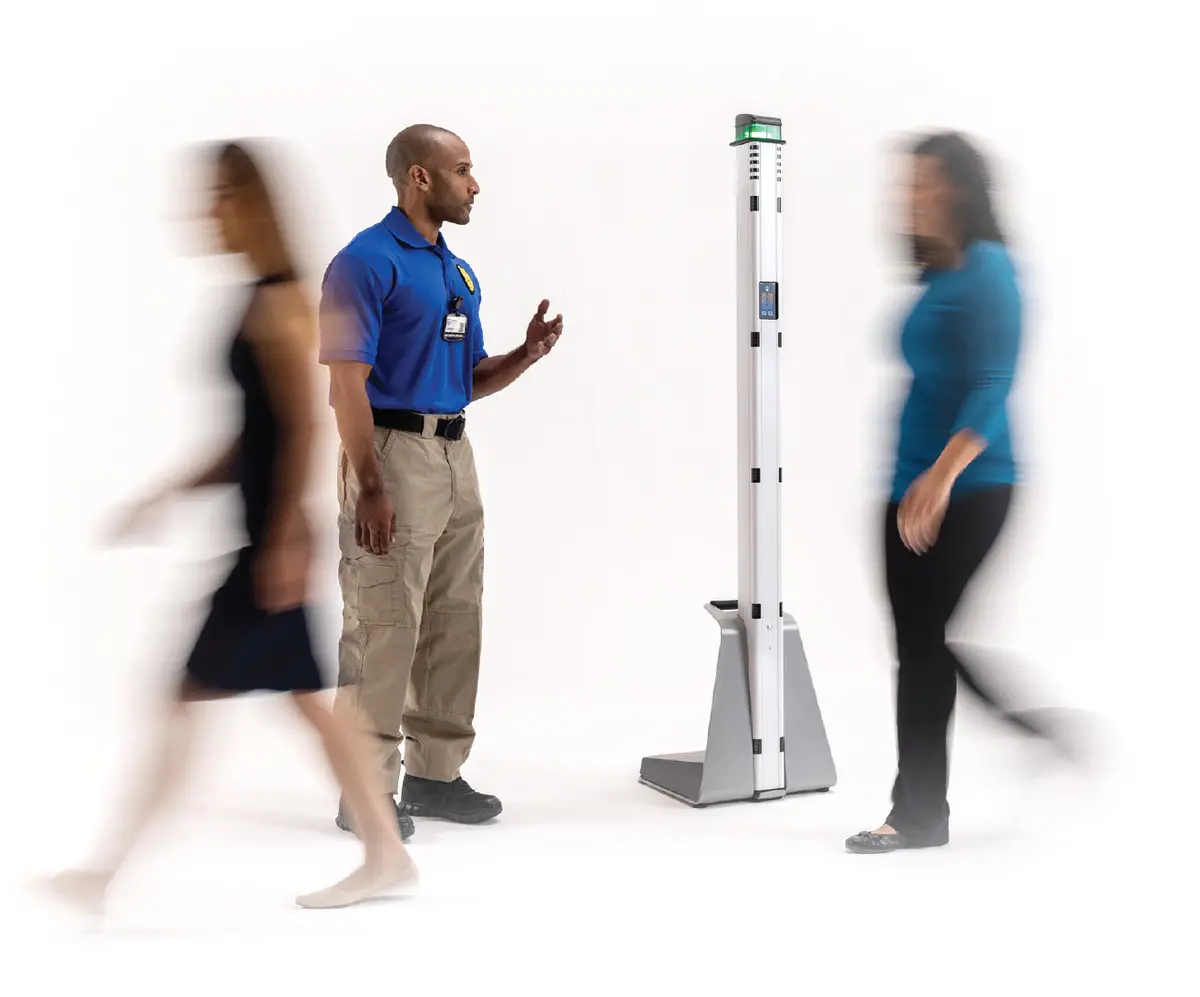
The Metrasens Ultra finds phones taped to the body, sewn into clothing or concealed internally — and a handset that is switched off, in flight mode or with the battery out still shows.
Drug Trace Detection
Trace detection identifies narcotics residue on hands, letters, clothing and property, including impregnated material that no X-ray image will reveal.
Cabinet & Conveyor X-ray
Property, post and parcels screened on arrival, with cabinet units where floor space is tight and a conveyor where volume demands it.
Just as important
What You Probably Don't Need
In practice
How It Runs Day To Day
Where the pressure is
Visits halls, reception and admissions, staff entrances, workshop and wing transitions — and portable enough to move when the intelligence changes.
Safe for everyone
Ferromagnetic detection emits nothing, so it is appropriate around pacemakers, implants and pregnant visitors, and repeatable daily.
Supported nationally
Multi-brand service and repair, parts on the shelf, and engineers who hold the clearances to work on secure sites.
Where X-ray is used for property and post, we recommend AI detection as standard — it flags weapons, ammunition and USB devices automatically, and does not have a bad shift. We supply and support screening across custodial and secure environments, alongside our work with government estates.
Phones, Drugs, Or Both?
Tell us what is getting in and where. We will tell you honestly which technology addresses it — and which doesn't.
Ask RedteQ Other sectors