
Home / Sectors / Loss Prevention
Distribution · retail · mining · high-value storage
Screening For Loss Prevention
Most screening asks what is coming in. Loss prevention asks what is going out — and it has to do it to hundreds of your own staff, every shift, without treating any of them like a suspect. Get the second part wrong and the first part stops working.
Start here
What You're Actually Trying To Stop
Internal shrinkage is a people problem before it is a detection problem, which is why the technology you choose has to survive contact with a workforce, a union and a shift pattern.
- High-value stock leaving — electronics, pharmaceuticals, cosmetics, tools: small, saleable and easily pocketed.
- Precious materials — gold, gemstones and ore samples, where a single item can outweigh a year of screening cost.
- Repeat, low-volume theft — rarely one dramatic incident; usually a small amount, often, by a small number of people.
- The dignity problem — a search regime that humiliates staff breeds resentment, grievances and turnover — and quietly gets defeated.
Our recommendation
What Actually Works On A Shift Change
Speed and dignity decide whether a loss prevention regime survives its first month. Six hundred people leaving at once is the design constraint.
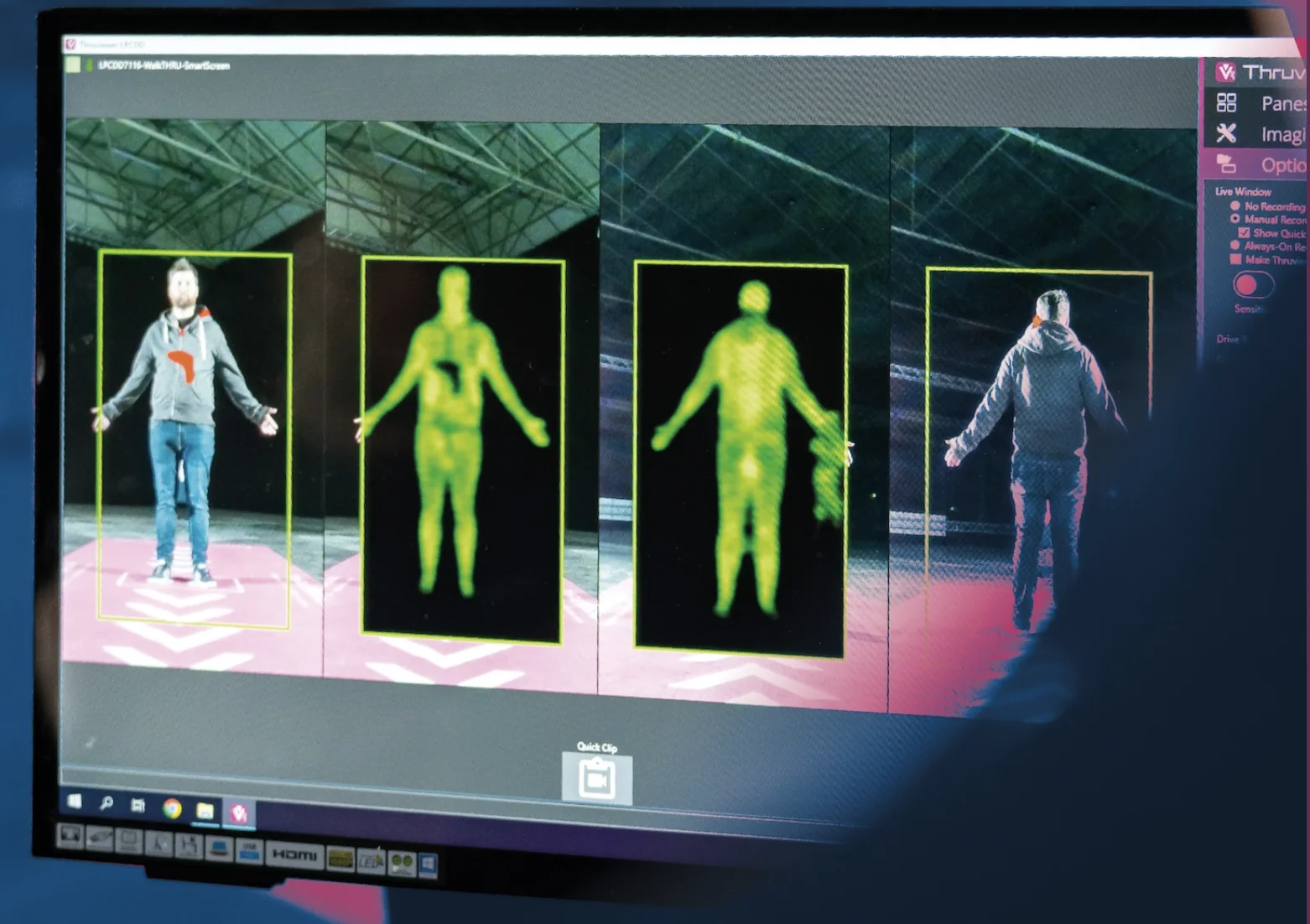
Thruvision Body Scanning
Passive terahertz imaging reveals items concealed under clothing at up to seven metres while people keep walking — no pat-down, no divestment queue, and nothing emitted. Built for exactly this application.
Concealed Item Detection
The Metrasens Ultra finds phones, drives and metallic items carried, taped on or concealed internally — rapidly deployable, so it can move to whichever door needs it this week.
X-ray With AI Detection
Bags and personal effects screened on exit, with AI flagging items automatically — a consistent standard at 22:00 as at 06:00, whoever is operating.
Just as important
What You Probably Don't Need
In practice
How It Runs Day To Day
Sited where the loss is
Staff exits, goods-out, high-value cages and clean-room boundaries — surveyed against where stock actually disappears, not where the door happens to be.
Fast at shift change
Screening several people as they walk, so a full shift clears the door in minutes rather than queueing to be searched individually.
Defensible
Consistent, recorded and applied to everyone, which is what makes a regime hold up with HR, a union or an employment tribunal.
This is a growing application for detection technology in distribution and retail, and the right answer is genuinely site-specific — we would rather survey it than sell from a brochure.
What's Walking Out The Door?
Tell us the site, the shift pattern and what is going missing. We will tell you what would actually stop it — and whether it is worth it.
Ask RedteQ Other sectors